- 1.0 The detective and the prosecutor
In general, the majority of theorists will agree with the definition of the term scientific method found in the American Heritage
Dictionary:
- “The principles and empirical processes of discovery and demonstration con-
sidered characteristic of or necessary for scientific investigation, generally
involving the observation of phenomena, the formulation of a hypothesis
concerning the phenomena, experimentation to demonstrate the truth or
falseness of the hypothesis, and a conclusion that validates or modifies the
hypothesis.” [1]
- I extract from this definition the relevant elements – observation, hypothesis, experimentation, and validation – a sequence
most authors more or less express in similar ways:
- “ observation…hypothesis…prediction…experiment…analysis” [2]
“ observation…hypothesis…predict…experimental tests” [3]
“ observation/experimentation, deduction, hypothesis, falsification”[4]
- Curiously, this definition fails to make provisions for two traditional pillars of the scientific method: definitions and theory. Can
a juror understand what the prosecutors are talking about if they haven’t illustrated the objects or defined their terms? Can the
prosecution make its case without a theory? And what does the phrase ‘modifies the hypothesis’ mean? Isn’t a hypothesis
supposed to be an immutable assumption? Are we to interpret, then, that the prosecutors may amend their assumptions
retroactively when experiment refutes their findings? More revealing still is the subtle circularity that emphasizes research:
‘The scientific method is a process… necessary for scientific investigation.’ So science is science! Great!
Such sloppy definitions so late in the game clearly show that the establishment has no clue as to what the scientific method
and science are about. So-called ‘scientists’ have the gall to protest the attempt by Kansas rednecks [5] to redefine the word
science for secondary schools when they themselves have but vague notions of its meaning. If the foregoing definition
synthesizes their perceptions of science, it should not surprise us that the theories of relativity and quantum are still around
today and that biologists and religionists have yet to settle whether Evolution is fact or theory.
The vision that comes to mind when you hear the word scientist is of an individual working with test tubes in a laboratory, a
fellow building rockets for NASA, or a physicist accelerating particles at CERN. The word science is generally associated with
the development of technology, with progress, and with prediction, all of which invoke experimentation and the future. Francis
Bacon synthesized the popular view of science 400 years ago:
- " Men have sought to make a world from their own conception and to draw from their
own minds all the material which they employed, but if, instead of doing so, they had
consulted experience and observation, they would have the facts and not opinions
to reason about, and might have ultimately arrived at the knowledge of the laws which
govern the material world." [6]
Others identify science with theoretical groups and think tanks, people whose daily tasks consist of brainstorming ideas in
order to elucidate the nature of our Universe.
Actually, science is something quite different, but in order to get an intuitive feel for an adequate definition, it helps to focus
first on its purpose. What does science hope to achieve? Does a scientist investigate the past by reading up on a little bit of
history or tempt the future by running an experiment? Is a biologist who studies birds a scientist? What about a relativist who
jumps from a ladder to test how fast he hits the ground? Are these activities what we call science? What if, after observing birds
for a year, the biologist didn’t learn anything? What if the relativist arrived at the wrong conclusions or designed the experiment
wrong or timed his fall with a lousy watch? How will we know what they did or whether they understood what happened if they
fail to publish their findings and open their theories up to criticism? Hopefully, when secondary school kids take science
courses they either read something that someone wrote or tell the class what they learned from a personal experience. Without
communication, science is dead.
Science involves two distinct individuals: a detective and a prosecutor. A detective is a lab technician, a researcher, an engineer,
the fellow who finds happiness in observing and tempting nature. Think of Galileo, Fresnel, Faraday, Michelson, and Curie,
individuals who labored incessantly and somewhat selflessly to sift secrets from Mother Nature. An investigator has an insatiable
curiosity, especially for phenomena that appear to work by magic.
In order to elucidate this particular secret of nature, the detective prepares a deliberate observation: an experiment. If this new
observation satisfies his curiosity (i.e., he thinks he has found a logical explanation), the investigative phase is over. Otherwise,
he has merely opened a new can of worms and continues his research. In a nutshell, the steps the researcher took include:
- • casual observation of a phenomenon
• tentative explanation
• recreation of the event to confirm the hunch
• new or refined explanation for the phenomenon or new experiment if
the explanation is unsatisfactory.
This sequence pretty much synthesizes the establishment’s perception of the scientific method and is consistent with the
definition I transcribed above.
The detective is a highly admired individual, but unfortunately a relatively inconsequential phase of science. The detective can
make countless predictions, run countless successful experiments, develop the most sophisticated technology, and still
understand nothing about nature, which is actually the present situation in science:
- “ Not only do we too easily draw the wrong conclusions from the given evidence, but
we can all too easily 'see' things different than how they really are, or are not even
there at all!” [7]
- But even if the detective did understand something it wouldn’t matter anyway. A detective is accountable to no one but himself.
If he is lucky, he gets the theory right, but if he is equally unfortunate and suffers a heart attack from the excitement a moment
later, he takes his secret to his grave and Science is neither the better nor the worse for it.
It is when the detective changes hats and becomes a lawyer that science really vibrates. Science has to do with information
bequeathed from one generation to another. Like an opera villain, the prosecutor is the true anti-hero, the embodiment of the
scientific method. We confer medals upon and glorify popular prosecutors especially when they cheat, lie, and steal
successfully. On the other hand, no one gives a damn about an anonymous although diligent and decent detective.
The role of the prosecutor is not to run experiments, but to communicate ideas to others and help them understand:
- " Science, which attempts to understand the observable universe, proceeds
by discovering generalizations (laws) about phenomena and providing
explanations (theories) for these generalizations. Theories are the ultimate
goal of science!" [8]
A scientist is someone who contributes to the pile of published papers. All alone in his lab, the prosecutor is just a detective,
his own jury, a ‘mad scientist’ obsessed with a pet peeve. A detective communicates ideas only to himself. There is no one in
his dark and humid basement to challenge what he has allegedly discovered. A secret is that which only one person knows. It
becomes confidential the moment the individual shares it with someone else. Science is not secretive. Science is confidential.
It is insufficient to try; you must succeed, and we don’t know whether you succeeded until you share your findings with us.
Science does not have to do with investigation or with proving, but with communicating ideas. Otherwise, all the animals in the
wild kingdom who go about their daily routines would be scientists. They all experiment and test their world around them, but
not all understand. The entire body of science consists not of people, not of experiments, not of technology, but of published
theses. The great maxim that a genuine scientist should tape to the office wall is ‘publish or perish’. I’ll rub it in one more time in
case you missed it: without communication, Science is dead.
- Science: The body of recorded material accumulated by man, usually in
written form, that follows the guidelines of the scientific method.
The prosecutor is the individual that the establishment has overlooked because of its insistence on research and experiment.
The mainstream has mistakenly concluded that an experiment is a necessary ingredient of science because of the alleged
impressive successes of the first to use the Inductive Method (Bacon, Galileo, Brahe), from the stunning accomplishments of
technology (radio, TV, computers, rockets, the A-bomb), and from the seemingly successful explanations offered by theoretical
Physics (gravity, light, and our Universe). The erroneous idea has developed that without an experiment (or Math) the prosecutor
only has a tentative explanation: a hypothesis. And if the tentative explanation is not even supported by observation, the
prosecutor is merely speculating or guessing. [9]
Actually, a prosecutor only rarely runs an experiment in the courtroom, and when he does, he has slyly put on yet a third hat that
has nothing to do with science or with the scientific method. The prosecutor is now acting as a politician. The purpose of an
experiment is to add weight to argument and coax the jury to change its mind. A consummated experiment is just another piece
of evidence and, as Popper noted, constitutes neither proof nor knowledge. The prosecutor differs from a politician in that he
focuses on his thesis, attempting to present it objectively and logically. The politician is more concerned about public opinion.
We will discover that the detective typically contributes hypotheses whereas the prosecutor is the person who conjures theories.
In this sense, they are both equal and necessary partners in the formulation of a scientific presentation.
To summarize, the detective is a person who wants to learn what happened whereas the prosecutor is responsible for exposing
the results of an investigation to public scrutiny. A prosecutor that doesn’t communicate ideas is just a detective, and a detective
holding on to his secrets contributes nothing to science. A pair of keen researchers does an even better job of summarizing my
arguments:
- “ A discovery does not consist merely of launching a tentative exploration of
an interesting problem and producing some calculations; it also involves
realizing that one has made a discovery and conveying it effectively to the
scientific world.” [10]
2.0 Too proud to publish
History is full of detectives who were too modest or proud to publish their findings, yet their respective countrymen seek world
recognition for them and their alleged discoveries. For example, Fermat [11] was apparently too proud to publish the proof to
his famous Last Theorem, and Tesla [12] boasted of having discovered a unified field theory. This is not science but ignorance
disguised as arrogance. No one today can test whether they did or not or whether their proofs and experiments had flaws. These
claims actually harm science because gullible, ordinary people get the wrong idea that their hero made a priceless discovery, but
that, because of the establishment’s inertia, the genius was not given his due. It's a similar argument to the one made by fools
who say that UFOs exist, but that the US Airforce is keeping it from the public to prevent a panic. Likewise, the longstanding
debate on the invention of the calculus and the discovery of Neptune should be resolved objectively. Newton did not publish his
alleged discovery of calculus (1693) [13] until after Leibniz (1684), [14] (both were probably upstaged by Stevin in 1586), while
Adams [15] [16] did not publish his alleged discovery of Neptune at all. Therefore, from a strictly objective point of view, the credit
for discovering calculus belongs exclusively to Leibniz and the credit for discovering Neptune to LeVerrier [17] who published
his paper in 1846. And it was not Thomson (1897), [18] but rather Perrin (1895) [19] who discovered that cathode rays were
comprised of negatively charged corpuscles. Thomson merely proposed that the electrons were part of the atom. There are also
cases like that of Peirce, [20] a prolific writer who published little to nothing of what he wrote. His manuscripts were discovered
in his home after his death. I say that anything that Peirce wrote is inconsequential if someone had to reinvent the wheels he
discovered. The credit should be given to the new discoverer if the unpublished material did not add to or serve as a basis for
new knowledge. The discovered material is just a footnote in history. It is the responsibility of the discoverer to seek to publish
if he wants credit and not the other way around. What excuse do we have for not knowing of the alleged discoveries of Fermat,
Newton, Adams, Peirce, and Tesla? Did they not have access to a printing press, or were they simply overly modest geniuses?
[21] [22] If they were too modest to publish, perhaps they would also be offended if we now put them on a pedestal. Maybe they
would rather remain anonymous.
Perhaps the most stunning case that shows the difference between a detective and a prosecutor is the phone controversy
involving Meucci and Bell. Meucci [23] [24] is the unambiguous inventor and early developer of the telephone, but he didn’t
exploit it commercially. Manzetti [25] re-invents Meucci’s telephone independently and gives Bell a presentation many years
after Meucci. Bell [26] was researching telecommunication to solve problems with his mother’s deafness and with his work
with deaf people. Bell begins to tinker with Manzetti’s device, realizes the telephone’s potential, takes the idea to America,
discovers that Meucci has filed a temporary patent that has the potential to upstage him, apparently bribes patent officials to
get rid of Meucci’s temporary patent, and replaces it with his own. Bell ends up becoming a millionaire, while Meucci rots in hell.
Over 100 years later, as a footnote in history, the U.S. Congress finally recognizes Meucci as the genuine inventor.
Assuming that this sequence of events is correct, who should we give the credit to? We have to bear in mind that in those days
many chose to publish their findings through newspapers as opposed to through scientific journals. Many inventors were not in
tune with the formal ‘scientific’ literature of the day or aware of the value of patenting their inventions. So culture played an
important role in this specific case. However, the hard facts are that Meucci did not apply for a patent until many years after he
had successfully developed his phone and got into some economic trouble. And had he filed it in the patent office in Havana,
Cuba, where he first tested his device, no one would have heard about it anyways. Perhaps someone in the Italian collectivity
suggested the idea to him to patent his device as a way to overcome poverty. Meucci even sued Bell, but apparently did not
have the funds to continue the litigation, so the case was dismissed, giving Bell a strategic reprieve.
Again, the Meucci – Bell story is a classic example of the differences between science and technology. Technology has to do
with inventions. Science has to do with publishing a rational explanation. Inventors invent and patent. They die without
recognition and have a lousy tombstone somewhere in an unmarked grave. Scientists explain and publish. They are granted
copyrights, become millionaires, and end up sleeping with the wives of the detectives who are too busy working in their
basements. Meucci was a technician, an engineer, an inventor. He was not a scientist. He held no copyrights to anything he
wrote. He didn’t take the trouble to publish in a way that would reach the masses or the scientific community when he still had
the chance to do so. This implies that he was so immersed in the task of discovering the secrets of telephoning that he didn’t
realize its enormous potential. Meucci was a solitary detective, a ‘mad scientist’ working all alone in his dark basement. Meucci
was not a prosecutor.
- 3.0 Conclusions
If we define science as the body of knowledge accumulated by man, we keep 100% of it in one form of recordable medium or
another. What wasn’t recorded, never happened! Verbal claims of tribal story-tellers, witch-doctors, and elders scatter in the
wind. A prosecutor does not usually run nor has to run an experiment. In fact, it is immaterial whether any prosecutor ever ran
an experiment in the lab, acquired knowledge from a bad dream, stole the idea from others, or derived conclusions from
impeccable mathematics. What is important is that the prosecutors expose the theory publicly in a logical manner. We call this
rational step by step process the scientific method.
As a final note, it is important to reinforce that science is distinct from technology. We may discover what artifacts nature allows
us to build through trial and error yet understand nothing about what makes them tick. Man realized early that two magnets
attract each other and eventually discovered that he could use magnets to deflect cathode rays. We use this technology to
build TVs and computers. However, to this day not a single person on Earth can explain to you what is physically happening.
Why does one magnet physically attract and then repel another. The 'experts' at think tanks like Cambridge and Harvard only
have opinions about the physical nature of magnetic fields and electrons (and misconceived ones at that). Science has to do
with theoretical interpretations (i.e., explanations and opinions). Technology has to do with objects developed mostly through
trial and error.
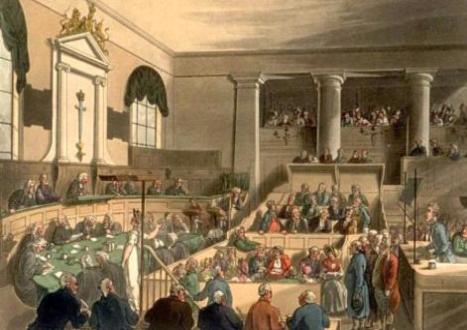
The prosecutor


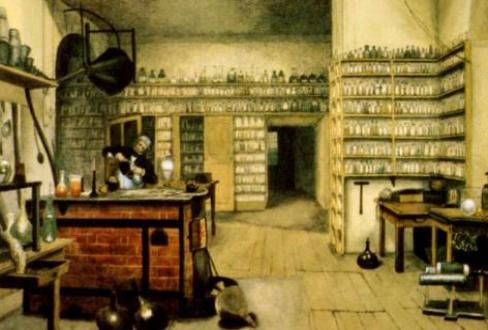
The detective

There's our hero!


| Yes. I know that lawyers are a bunch of charlatans. But they are the true scientists! |
- Module main page: Scientists don't know what Science is
Pages in this module:
- 1. Relativists believe that Science is about predicting and falsifying
2. This page: So what is Science, really?
3. Relativists don't understand the difference between Science and Religion
- 4. A relativist believes that a hypothesis is a prediction
5. A relativist thinks that a theory becomes a fact
6. Why are conclusions necessary?
7. The five unscientific words of Mathematical Physics: energy, mass, force, field, and time
8. Mathematical Physics only offers Ptolemaic explanations
9. Relativists confuse Technology with Science
10. Relativists give Nobel Prizes to each other
| So what is Science, really? |
Adapted for the Internet from:
Why God Doesn't Exist
Why God Doesn't Exist

- ________________________________________________________________________________________
- Copyright © by Nila Gaede 2008